

Permeable paving.
Thoughtful from the ground up.
A refined driveway or patio starts with more than the surface. Water movement, the supporting layers and the conditions on your property all deserve attention.
What makes paving permeable?
Permeable interlocking concrete pavement is a complete system. Water passes through aggregate-filled joints into open-graded stone layers below, where it can be temporarily stored. Depending on the site and design, it then infiltrates into the soil or is carried away through drainage.
Conventional pavers are not automatically permeable. The joint material, bedding, base and drainage arrangement must work together.
Start with the property
Soil conditions, slope, groundwater and the way the area will be used influence the right approach. A vehicle driveway has different demands from a garden path. Planning those details early helps the paving fit both the landscape and the job it needs to do.
Plan for ongoing care
Sediment can collect in the joints over time. Appropriate cleaning and maintenance help keep water moving through the surface. Keep loose soil and landscaping debris away from the paving, and include maintenance in the conversation before installation.
Considering a custom installation? Bring us your ideas and site photos. We can discuss paving options, the layout and the next steps for assessing your property.
Technical background: CMHA — Permeable pavement construction · CMHA — Maintenance guide
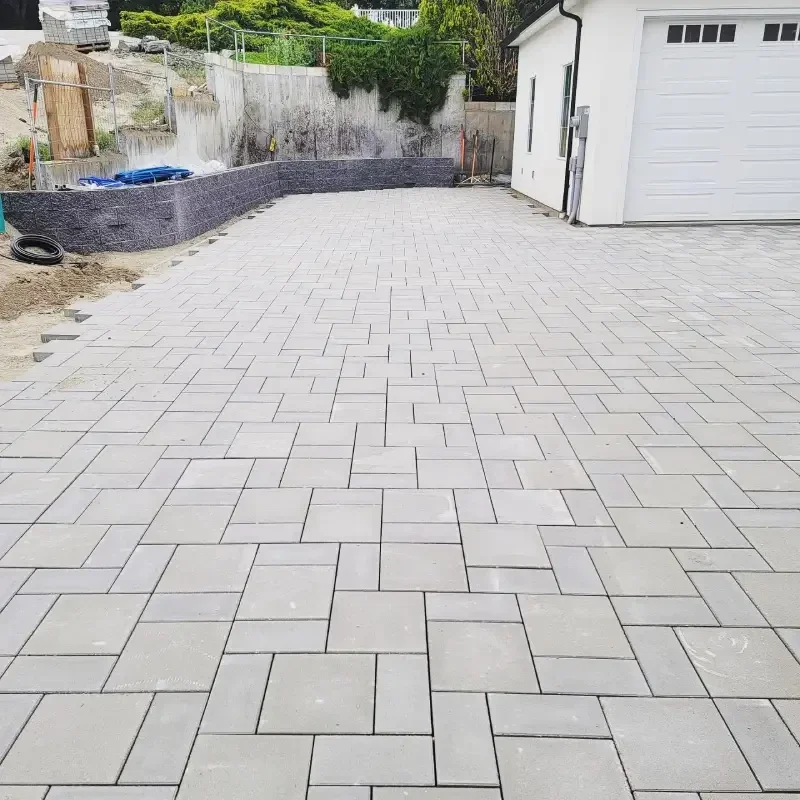
Photo shows a paving project from our gallery; it does not identify the drainage system beneath the surface.
